Impact infrastructure debt fund: “Investors liked that we did not try to present them with an idealised picture.”
13.01.2026|8 min
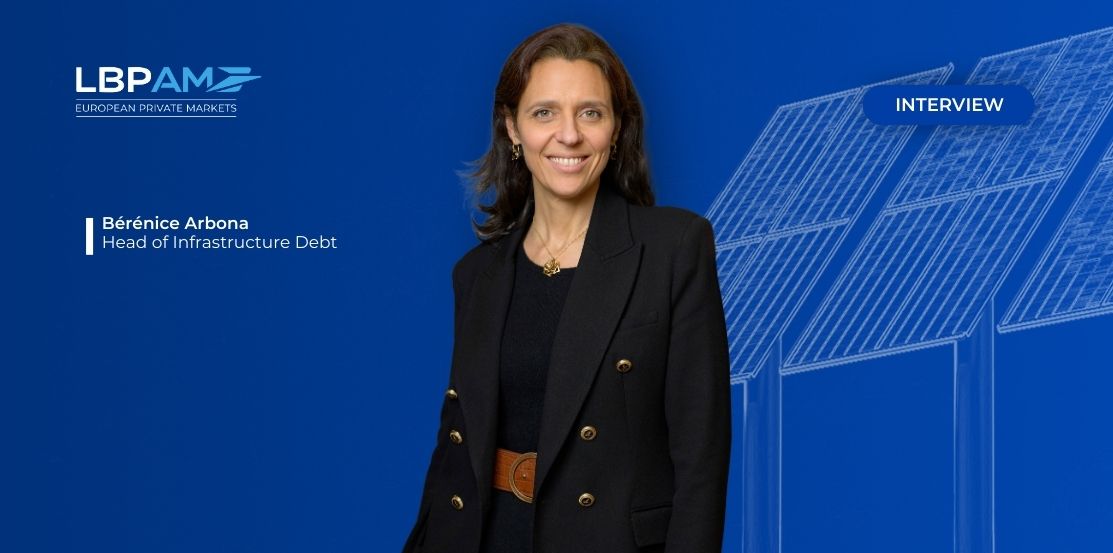
LBP AM European Private Markets, LBP AM’s unlisted asset investment platform, has just published the second annual impact report for its LBP AM Infrastructure Debt Climate Impact Fund, covering Infrastructure debt, climate impact, European taxonomy, measurement and transparency. To mark the occasion, Bérénice Arbona, Head of Infrastructure Debt at LBP AM European Private Markets (EPM), reviews the fund’s strategy, the report’s key findings and the challenges of reconciling regulatory requirements with operational realities.
Launched in 2022, LBP AM’s impact infrastructure debt fund takes a rigorous approach to sustainable investing. Classified as Article 9 under the SFDR, the fund favours investments that contribute to climate change mitigation, with the aim of aligning 70% of the portfolio with the European taxonomy by the end of the investment period. To mark the publication of the second annual impact report, L'Info Durable (ID) — a French media outlet dedicated to sustainable development and responsible finance —spoke with Bérénice Arbona to discuss the fund’s impact strategy, the report’s key findings and prospects for continuous improvement.
What are the characteristics and strategy of the LBPAM Infrastructure Debt Climate Impact Fund?
We launched this fund in 2022, based on two observations. First, we had significant experience of investing in green infrastructure; historically, more than half of our infrastructure debt investments have been in this asset class. Second, we had developed over the years strong ESG analysis and impact measurement capabilities, particularly as regards climate impact. This enabled us to adopt a demanding position from the outset: the fund is classified as Article 9 under the SFDR, and explicitly aims to contribute to reducing greenhouse gas emissions in the real economy, while ensuring sound ESG risk management.
The fund’s impact strategy is based on three clear principles: intentionality, additionality and measurement. Intentionality refers to the commitment to contribute to the portfolio’s climate objective, which is aligned with the Paris Agreement to limit global warming to below 2°C by 2100. Additionality is based on a very high degree of selectivity; we exclusively finance projects that significantly contribute to the climate change mitigation objective, as defined by the highly demanding European Taxonomy. Finally, measurement is also central to our strategy and comprises three main indicators: the carbon footprint of the assets and the portfolio across all scopes, the portfolio temperature and the alignment of each of the fund’s assets with the European taxonomy.
In developing our impact strategy, we drew on the work of the FIR, France Invest, the Institut de la Finance Durable and the GIIN, among others. The fund also uses an impact scoring tool based on the Impact Frontiers methodology, which allows us to compare the relative contribution of the portfolio’s assets. Finally, we have opted to have our impact report audited annually by an independent auditor who will look closely at our methodologies and measurement indicators.
In addition to its investment thesis dedicated to climate impact, the fund undergoes a holistic investment analysis to identify and consider the sustainability risks of each project in the investment selection process. This ESG due diligence is based on our proprietary GREaT methodology, which is tailored to the specific characteristics of infrastructure debt. Developed since 2016, it is regularly updated to incorporate the latest benchmarks for identifying these risks.
The second annual impact report for the impact infrastructure debt fund has just been published. What are the main findings highlighted in this report?
Developed since 2016, it is regularly updated to incorporate the latest benchmarks for identifying these risks.
One of the key findings of the 2024 report is that all investments are eligible for objective 1 of the European taxonomy, confirming the overall consistency of the selection process with the climate change mitigation objective. In terms of climate contribution, the estimated portfolio temperature is 1.6°C, representing a significant level of alignment with the trajectories outlined in the Paris Agreement.
However, strict taxonomy alignment in the regulatory sense stands at 59% (an improvement on the 45% flagged in the first report), compared with a target of 70% by the end of the investment period. This gap does not call into question the environmental quality of the projects financed; rather, it reflects the operational and documentary complexity of certain technical criteria, particularly those relating to the DNSH (Do No Significant Harm) principle. Demonstrating full compliance with these criteria can be difficult in a diversified portfolio including renewable energy, biomass, electrification, energy efficiency and data centre projects. This difficulty stems notably from the fact that certain DNSH requirements are not fully aligned with operational realities in terms of the availability and structure of the information required.
Finally, the report highlights the portfolio's strong overall non-financial performance, as demonstrated by the GREaT scores (our proprietary ESG analysis methodology) and the portfolio's impact score, which demonstrates our commitment to continuous improvement, as evidenced by the progress made in our impact scoring methodology. We have capitalised on the previous year’s independent audit to make it less subjective.
Did you learn anything else from this process?
Yes, we were able to demonstrate that certain results could be significantly affected by methodological choices. For example, the Ciara tool, developed by Carbon 4 and which we use to calculate the carbon emissions of the portfolio and assets, adopts a location-based approach reflecting the average emission factor of the local electricity grid, whereas the taxonomy is more market-based, taking into account the company’s contractual energy supply choices. We felt it was essential to explain the differences between these different methodological approaches to investors.
How did investors react to this impact report?
Rather than simply reporting, we organised a dedicated presentation of the report. The feedback was very positive, particularly regarding the level of transparency. Investors liked that we did not seek to present an idealised picture, but clearly explained what works, what remains complex, and why. This fact-based approach, which included the methodological issues of certain indicators and the taxonomy, was perceived as a guarantee of credibility.
What is the outlook for future impact assessments?
One of the key points for us is the continuous improvement of our methods and the assets we finance. Following the independent audit of our first report, we strengthened and simplified our impact scoring methodology to minimise criteria based on qualitative expert assessments. We also engaged in structured dialogue with our issuers, providing them with detailed findings from taxonomy analyses so that they can take these into account in future reporting processes. Our objective remains unchanged: to improve portfolio alignment gradually while maintaining high standards of transparency for investors.
First published in French by ID L'info durable.